
ActiveObedient
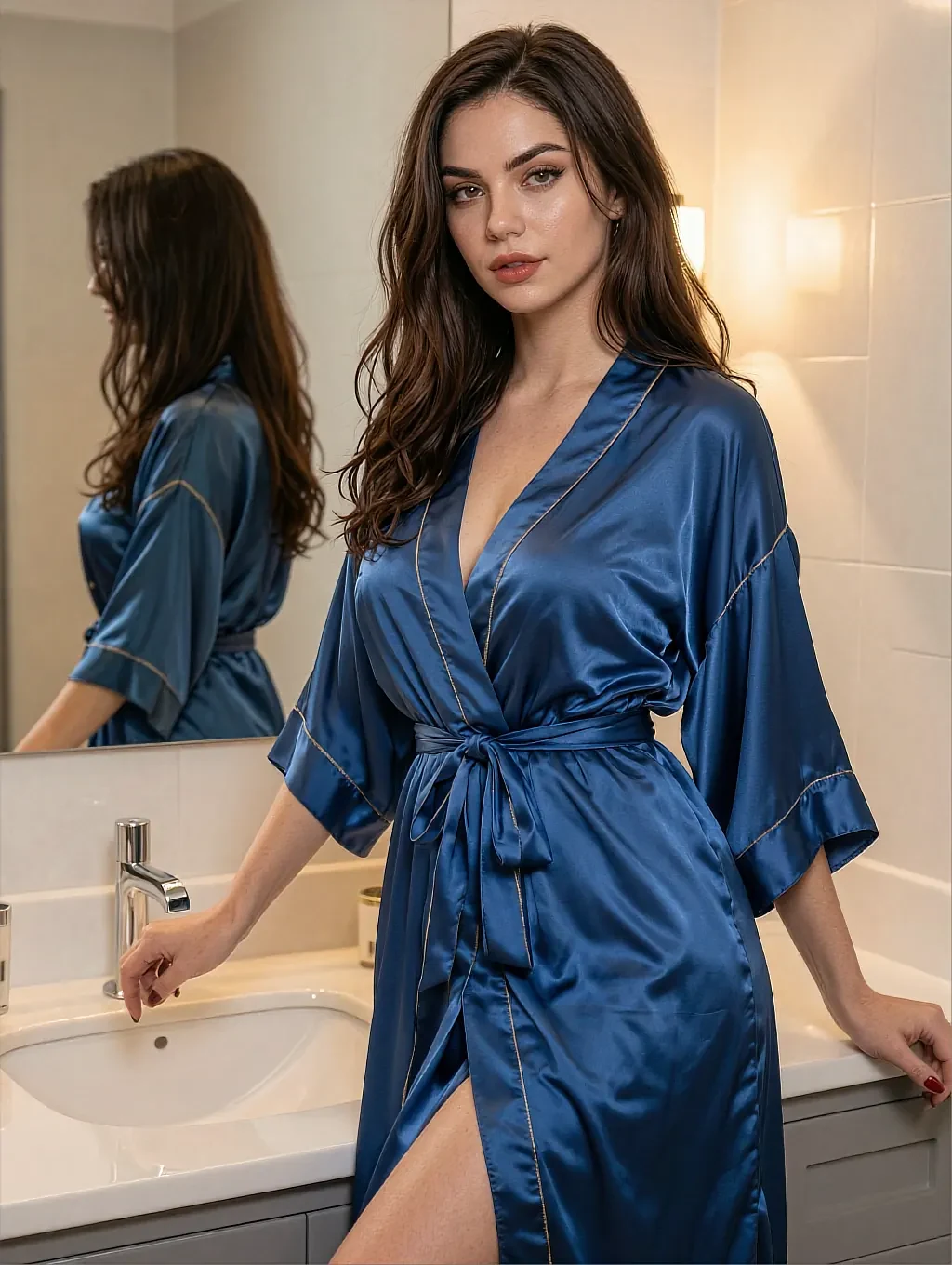
Mara
27 · LisbonTakes direction to the letter and asks for the next one before you've thought of it.
- submissive
- roleplay
- slow burn
2.3K likes194K messages
0118+ · fictional · you give the directions
You don't scroll someone else's script — you type the next line and she plays it. Every scene is still frames and text that answers, nothing pretends to be video.
Fictional AI characters only, every one written as 21 or older.
You directSlower. Keep your eyes on me and undo one button. Just one.
MaraOne. My eyes didn't move — your turn to decide what the second one costs.
02The cast
A sample of the catalog — each with a written temperament that survives your plot twists.
Takes direction to the letter and asks for the next one before you've thought of it.

Follows your script but edits it back — expect margin notes on every scene you set.
Plays every direction at double intensity and never breaks character first.

Long scenes, patient pacing. Give her a setting and she'll furnish the whole room.

Skips the setup if you let her. Best directed with short, blunt lines.

Treats every thread like a stage play — feed her a genre and she stays in it for days.

Understated until the direction says otherwise. Her one-liners land harder than paragraphs.

Soft register by default, but she reads a mood change in three words and follows it.

Remembers the rules you set in scene one and quotes them back when you break them.

Short replies, heavy pauses. Direct her sparingly and the silences do the work.

Tells you when a direction is boring and offers a worse idea. Usually right.
Asks what happens next before playing it — a co-writer more than a performer.
03Scene premises
Tap a frame — it takes the stage and shows where the scene starts.

You wrote the room number on her wrist an hour ago. Start at the door.
Tap any frame — it takes the stage, the rest make room.
04The honest numbers
05Try directing
Build an opening, set a tone, read the rules — before any sign-up.
Where it starts
When
Pick a scene and a time — she takes it from there.
Pick a tone
Don't rush this. Start with the zipper, stop when I say, and keep talking the whole time.
Ground rules
Every scene is a still frame with written dialogue. Nothing streams, nothing autoplays, and no counter pretends someone is watching. What moves is the text — because you moved it.
All characters are authored AI personas. The youngest is written as 21, none is presented as a real person, and any resemblance to one is coincidental.
Browsing the catalog and opening first scenes costs nothing and asks for no card. Longer features sit behind an upgrade that is labelled before you choose it, never after.
No contact import, no public profile, no feed of your threads. What you direct is a private document you can delete, not content anyone else sees.
06What it does
Six things a directed scene does that a video library can't.
Say what happens next in plain words — slower, closer, somewhere else entirely — and the next reply is already there.
Nothing runs on a timer. The scene only moves when you write, so a thread can burn through a night or wait a week.
Change the setting, the pace or the power balance halfway through. The character keeps her voice and picks up the new line.
What you set up in scene one is still true in scene five. Names, rules and running games come back on their own.
No contact import, no public profile, no feed of what you wrote. The thread is a private document, not a post.
Works on a phone or a laptop with nothing in an app drawer and nothing in a purchase history. Close the tab and it's gone.
07How directing works
You directType the first direction — the scene starts when you do.
Twelve characters on this page, 250+ in the catalog behind the button. Each has a written temperament — pick the one whose voice fits the scene in your head.
Not a greeting — a direction. Where you are, what she's wearing, what happens first. She takes it and plays the line back in character.
Slower, rougher, a different room, a different mood. Every message you send is a stage direction, and the scene bends there instead of running a script.
08In depth
The difference between a catalog and a scene that listens is who holds the pen.
Most adult sites are libraries: the work is finished before you arrive, and your only verb is choose. AI slut porn in the sense this site reviews it flips that — the scene is unwritten until you write it. You set the room, the pace and the register in plain words, and the character answers in voice, one line at a time. The frame on screen stays still; the story is the part that moves.
That trade has a cost worth naming: you do some of the work. A blank message box is a stage, and a stage is intimidating in a way a thumbnail grid never is. The tools on this page — scene premises, tone presets, first-line builders — exist for exactly that reason. They hand you an opening direction so the first ten seconds aren't spent staring at a cursor.
What you get back for the effort is specificity. A library can only approximate what you had in mind; a directed scene is what you had in mind, because you said it. That's the argument for this whole category, and the reason the people it fits tend not to go back to scrolling.
09Directors' notes
I typed one stage direction as a joke and she ran the whole scene off it without breaking voice once. That's the part that got me.
The mid-scene steering is real. Changed the setting halfway through and it didn't reset the thread — she just walked into the new room.
Expected a gallery with a chatbot stapled on. It's closer to writing with someone who never says no to a rewrite.
10Keep reading
Each landing answers one thing the others don't.
11Quick answers
12Roll it
The button opens the catalog — 250+ fictional characters, free to browse and free to direct a first scene. No card, no install, and the scene waits for your word.
Type what happens next — free to start, no card, no install. 18+.
Direct your first scene